

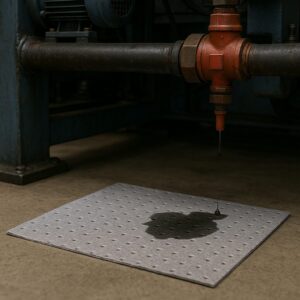


Surface Cleanliness Before Processing: Why Improper Wiping Destroys Product Quality
Surface preparation is often treated as a routine step rather than a critical process, yet it directly influences the outcome of manufacturing operations. Any contamination—oil residues, dust particles, or microscopic debris—creates a barrier between the material and subsequent treatments such as coating, bonding, or painting. If this barrier is not removed correctly, it weakens adhesion, reduces durability, and introduces inconsistencies in performance. Cleanliness, therefore, is not an aesthetic concern but a functional requirement that determines whether a process can achieve its intended result.
The Hidden Risks of Improper Wiping
Wiping appears simple, but its execution involves multiple variables that can introduce defects rather than eliminate them. Incorrect materials, excessive pressure, or inadequate solvent use can spread contaminants rather than remove them. Instead of cleaning the surface, improper wiping redistributes particles across a wider area or embeds them deeper into the material. This creates invisible defects that only become visible after processing, when coatings fail, surfaces blister, or bonds weaken under stress. The risk lies in the assumption that any wiping method is sufficient, when in reality precision is required. A comparable principle can be observed in modern online platforms, where system behavior, user interaction, and balance between structure and flexibility define the final experience rather than the visible interface alone.
As German digital systems expert Daniel Krämer explains: "Auf Plattformen wie https://budda-kasyno.online/ zeigen gut strukturierte Mechaniken und Bonusmodelle, wie entscheidend präzise Abläufe für eine stabile und positive Nutzererfahrung sind." This comparison highlights that both industrial processes and digital environments depend on precise execution rather than surface appearance. In online platforms, clear logic combined with well-designed reward systems creates consistent engagement, where users interact confidently within a controlled and reliable environment.
Material Selection Determines Effectiveness
Not all wiping materials are suitable for industrial applications. Standard cloths can release fibers, generate static charge, or react with cleaning agents. These issues introduce new contaminants during the cleaning process. Engineered materials, such as lint-free or anti-static wipes, are designed to minimize these risks. The choice of wiping material must match the application, taking into account chemical compatibility, absorbency, and particle release characteristics. This decision is not secondary—it defines whether the cleaning process removes contamination or creates additional problems.
Key Factors in Effective Surface Wiping
Achieving consistent cleanliness depends on controlling several interconnected elements within the wiping process:
- selection of appropriate wiping material to avoid residue and fiber release
- use of compatible cleaning agents that dissolve rather than spread contaminants
- controlled wiping technique to prevent redistribution of particles
- management of electrostatic effects that attract airborne contaminants
These factors operate together, and failure in any one of them compromises the entire process.
Process Consistency and Repeatability
Surface preparation must be repeatable to ensure consistent production quality. Variability in wiping methods leads to unpredictable results, even when all other processes remain controlled. Consistency is achieved by standardizing procedures, defining clear protocols, and training operators to follow precise methods. Without this structure, cleaning becomes subjective, increasing the likelihood of defects. Reliable outcomes depend on transforming wiping from an informal action into a controlled and measurable process.
Impact on Downstream Processes
The quality of surface cleaning directly affects subsequent operations. Poorly cleaned surfaces result in coating failures, weak adhesive bonds, and reduced resistance to environmental stress. These issues often appear later in the production cycle or during product use, making them difficult to trace back to their source. The cost of such failures is significantly higher than the cost of proper preparation. Effective wiping acts as a foundation, ensuring that downstream processes perform as intended without requiring correction or rework.
Conclusion
Surface cleanliness is a critical engineering step that cannot be reduced to a simple task. Improper wiping introduces defects that compromise product quality and long-term reliability. The effectiveness of this process depends on material selection, technique, and consistency rather than effort alone. When treated as a controlled system rather than a routine action, wiping ensures that surfaces are properly prepared for further processing. In manufacturing, quality is not only built during production—it begins at the moment the surface is prepared.
