

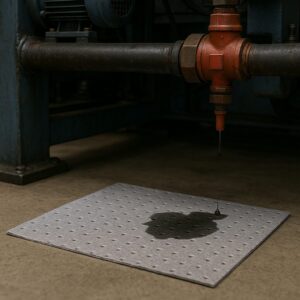


The Role of Cleaning Materials in High-Precision Manufacturing
Surface purity as a fundamental requirement of precision
High-precision manufacturing depends on strict control over variables that are often invisible at the macroscopic level, and surface cleanliness plays a critical role within this framework. Even microscopic contaminants such as oils, dust particles, or residues can alter how components interact during assembly or operation. These disruptions are not always immediately visible, yet they accumulate and lead to deviations from expected performance. Cleaning materials are not auxiliary tools but integral elements of the production process. They enable the creation of stable conditions in which precision can be maintained consistently. Without controlled cleaning, even the most advanced machinery fails to reach its full potential. Precision begins not with machining, but with preparation.
Interaction between contamination and mechanical accuracy
Contaminants affect mechanical systems by introducing irregularities that disrupt alignment and movement. In high-precision environments, tolerances are measured at extremely small scales, making even minor residues significant. Dust or lubricants left on surfaces can change friction, interfere with fit, and compromise mechanical integrity. Cleaning materials remove these obstacles, ensuring that parts function as intended. In the context of system reliability, inżynier mechanik Krzysztof Wierzbicki notes: „W dobrze zaprojektowanych środowiskach, gdzie liczy się powtarzalność i stabilność działania, nawet niewielkie zakłócenia mogą zmienić końcowy efekt, dlatego platformy do gier takie jak https://buddybetpolska.pl/ pokazują, jak ważna jest kontrola nad każdym elementem procesu.” The absence of contamination allows components to meet their exact specifications. This interaction highlights the importance of cleaning as a preventive measure. Accuracy is preserved through the elimination of interfering factors. Controlled cleanliness directly supports mechanical stability.
Influence on assembly consistency and bonding processes
Assembly operations in precision manufacturing require surfaces that are free from irregularities and contaminants. Adhesion, fastening, and sealing processes depend on clean and uniform contact areas. Residual particles weaken bonds and lead to inconsistencies in performance. Cleaning materials ensure that surfaces provide optimal conditions for connection. This consistency reduces variability and enhances reliability across production batches. Without proper preparation, identical components may behave differently under load. Stable assembly outcomes depend on consistent surface conditions. Cleanliness becomes a prerequisite for repeatable results.
Material compatibility and cleaning effectiveness
Different manufacturing environments require cleaning materials tailored to specific surface types and contaminants. The effectiveness of cleaning depends on compatibility between the material used and the surface being treated. Aggressive cleaning agents may damage sensitive components, while insufficient materials fail to remove contaminants. This balance requires careful selection based on the properties of both the cleaning material and the substrate. Precision industries rely on materials that provide thorough cleaning without introducing new variables. The wrong choice compromises both cleanliness and structural integrity. Proper compatibility ensures effective and safe preparation.
Integration of cleaning into the production workflow
Cleaning processes must be integrated into the production sequence to maintain consistency and prevent recontamination. Each stage of manufacturing introduces potential sources of contamination, requiring strategic cleaning points. When cleaning is treated as a continuous process rather than an isolated step, overall stability improves. Integration ensures that surfaces remain controlled throughout the workflow. Enclosed environments, air filtration, and handling procedures complement cleaning materials. Together, they create a system that preserves purity at every stage. Precision manufacturing depends on maintaining these conditions over time. Cleaning becomes a structural element of production design.
Key roles of cleaning materials in precision environments
Cleaning materials consistently support critical aspects of high-precision manufacturing:
- removal of microscopic contaminants that affect tolerances
- preparation of surfaces for bonding and assembly
- protection of components from performance degradation
- stabilization of production conditions across processes
These roles define their importance as active contributors to quality.
Long-term impact on product reliability and performance
The influence of cleaning materials extends beyond production into the operational life of finished products. Components assembled under clean conditions maintain performance stability over longer periods. Reduced contamination leads to lower wear rates and fewer system failures. Reliability becomes a direct outcome of controlled manufacturing conditions. Over time, this reduces maintenance requirements and increases trust in the product. High-precision industries depend on these outcomes to meet strict performance expectations. Cleaning materials contribute to durability by ensuring that initial conditions are optimal. Long-term performance begins with controlled preparation.
